 By
By 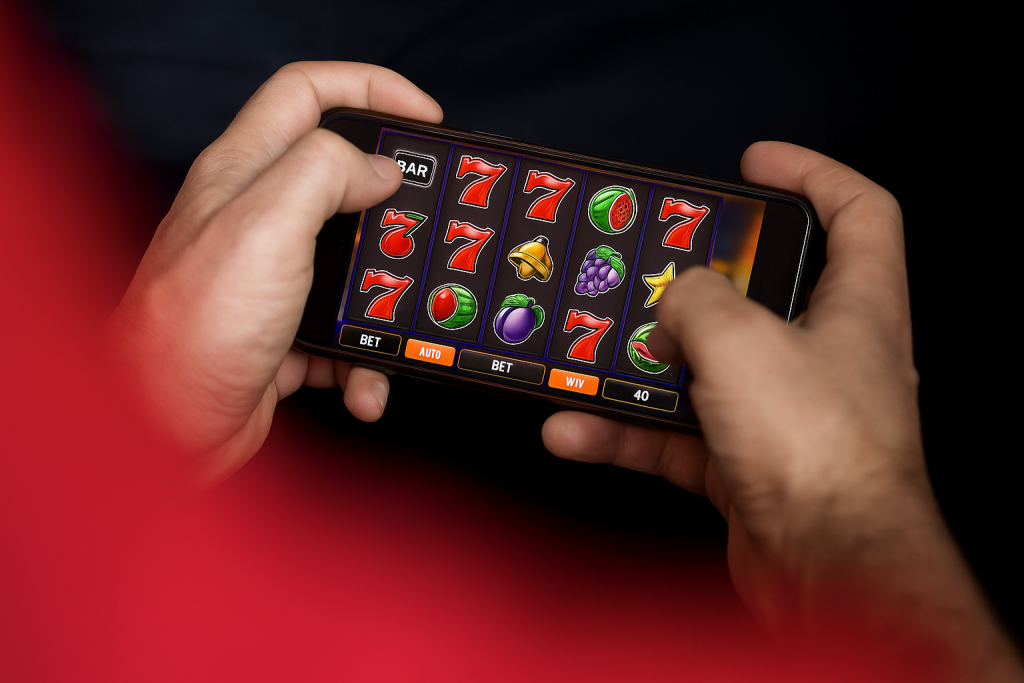
Beyond RTP and volatility, real-money slots use story, sound, and psychology to keep players engaged. Playguy explores the science behind why UK gamblers prefer some slots over others.
Not Just RTP: Why Some Slots Hook You In — And Others Don’t
You open the app. You’re greeted not by numbers or odds, but a sweeping orchestral swell, firelit reels, and the chiselled jawline of a digital gladiator. It’s Age of the Gods — and within 30 seconds, you’ve forgotten this is gambling.
Compare that to a bare-bones fruit machine simulator with neon cherries and a single payline. Functionally similar. Viscerally? Not even close.
Ask a casual slot player why they chose one game over another, and the answers rarely mention Return to Player (RTP) rates or volatility. More often, it’s: “I liked the vibe.”
But what makes a slot “feel” right? And why are some titles — like Rainbow Riches, Slingo, or Starburst — endlessly replayed, even when the odds are average?
The answer lies in psychology. And the games know it better than you do.
It’s Not Just About Winning: It’s About Feeling
Slot machines aren’t just mathematical engines. They’re psychological environments. Research has shown that features like animations, soundtracks, colour palettes, and even narrative framing drastically affect how “sticky” a game feels.
Players show strong preferences not just based on RTP, but on aesthetic, story, and sensory feedback (Shoemaker & Zemke, 2013).
This ties into what game designers call game feel — the seamless blend of visual, auditory, and haptic feedback that makes an experience immersive, smooth, and rewarding.
Studies confirm that sound, in particular, is powerful. In a controlled experiment, gamblers playing with winning sounds were significantly more aroused, preferred the games more, and overestimated how often they’d won, compared to silent conditions (Dixon et al., 2013).
Even losses disguised as wins (LDWs) — like when a slot lights up for a £0.30 “win” on a £1.00 spin — can create physiological excitement similar to real wins. That’s not just confusing; it’s deliberate reinforcement (Templeton et al., 2015).
The “Machine Zone”: Where Time and Money Disappear
In her landmark book Addiction by Design, anthropologist Natasha Dow Schüll coined the term machine zone — a psychological state of total immersion where players are neither winning nor losing, but simply existing within the machine’s rhythm.
This zone is engineered. Through rapid spin speeds, multi-line betting, and frequent audiovisual feedback, modern slots keep you spinning, regardless of outcome.
Even when outcomes are identical, design elements like colour and sound can bias players toward certain machines, creating loyalty to a “preferred” game that’s functionally no different.
This explains why immersive slots like Gonzo’s Quest, Book of Dead, or Slingo Reel King keep players spinning longer than stripped-down digital one-arm bandits — even with identical RTP.
Storytelling as Strategy
Narrative isn’t just decoration. A game like Rainbow Riches doesn’t just offer bonus rounds; it frames them as a journey with a leprechaun and magical cash paths. Age of the Gods builds in mini-mythologies and progressive jackpots like chapters in a novel.
When themes are present, players assign meaning to outcomes. Near misses feel like narrative tension, not just loss.
Bonus rounds, free spins, and interactive features aren’t just for prizes — they offer breaks in monotony, story progression, and a sense of control, even when the outcomes are random.
Immersive vs. No-Frills: When Simplicity Wins
Of course, not everyone wants a full theatrical experience. Many UK players — particularly older demographics or pub-goers — still prefer classic-style machines.
Games like Bar-X or Mega Joker offer low volatility and recognisable symbology: lemons, bells, sevens. For these players, the appeal lies in predictability and nostalgia.
A study of player segmentation found that different player types value theme, sound, bonus mechanics, or simplicity — and design needs to match expectations.
When the Brain Outweighs the Maths
So if aesthetics are so powerful, what happens to logic?
Surprisingly, even informed players often ignore higher RTPs in favour of machines they like. That means a 92% RTP game with dragons and bonus music might outperform a 96% RTP slot in real revenue terms.
In lab experiments, players didn’t consistently favour higher-payback machines when competing aesthetics or bonuses were involved. Instead, they were drawn to free spin features, sounds, and visual excitement.
This aligns with prospect theory: players overweigh low-probability big wins and assign value to emotionally salient outcomes, not just mathematically optimal ones (Lien, 2009).
Popular real-money slots people love playing on UK Sites
| Slot | RTP (%) | Why Attractive | Available at |
|---|---|---|---|
| Rainbow Riches | 95% | Bonus paths, pick-me rounds | Bet365, Paddy Power |
| Age of the Gods | 94.03% | Narrative jackpots | Betfair, William Hill |
| Slingo Rainbow Riches | 95.6% | Slot + Bingo hybrid | 10Bet, Monopoly Casino |
| Starburst | 96.09% | Wild expansions, simplicity | Sky Vegas, Grosvenor |
| Big Bass Bonanza | 95.67% | Scatter bonuses | Puntit, Betfred |
Always check the site-specific RTP; UKGC rules allow operators to offer slightly different versions.
Final Spin: Why Design Matters
In the end, it’s not just about maths. The slot machine has evolved into a sensory experience, where dopamine is as important as payout tables. Players chase not just money, but feeling — of control, excitement, immersion, and escape.
This makes responsible design more important than ever. Because when aesthetics blur into psychology, and story into strategy, gambling becomes more than a game.
